

Earlier this year, Dezeen reported on research from MIT’s Senseable City Lab which suggests that pedestrians are walking 15 per cent faster and stopping to linger 14 per cent less than they used to. Computer models comparing William H Whyte’s Social Life of Small Open Spaces and similar footage by Keith N Hampton 30 years later also found that, in 1980, one in 20 people interacted with those around them, while, in 2010, it was just one in 50. These are American studies, but the observations and reflections about distractions (mobile phones versus conversation) and lure of private space (coffee shop versus park bench) feel familiar from a contemporary UK perspective. There are implications here for the design of public space, whether your preference is to service speed or to optimise the potential for public goods like social interaction or access to nature. Either way, with loneliness increasingly recognised as a physical and mental health risk and urban intensification squeezing out the spaces in between our homes, there’s a lot riding on our public realm if it is to be truly public in the sense of belonging equally to all.
I was reminded of the Dezeen piece when Dr Clare Hickman and I convened a panel and roundtable event last week at Newcastle’s Farrell Centre with the title “Just Objects?”. The impetus for this event came from our respective projects on parks and health and diverse experiences of rural rights of way, historically and in the present. These were brought together in exhibition form as Keep On the Grass, part of a wider programme under the rubric of What is an Ideal City? which asks what makes a playful city, a living city, a just city.
I’m not going to attempt to capture everything we discussed, as the conversation ranged across signs, QR codes, fences, barriers, kissing gates and stiles; urban and rural contexts and constraints; historic clearances and enclosures; commercialisation; and rights of way; and evolving attitudes towards inclusion. However, there were two complementary themes on which I continue to muse, both of which relate to my preoccupation with public space and “belonging”. The first is about belonging and access in the sense of what makes people feel like a place is somewhere they can go in the first place. The second is about belonging and inclusion in the sense of what makes people feel a place is somewhere they can then stay rather than hurry through. Material features in the environment are only one factor shaping these things, but they are important for health and equity and, as such, merit the hard work needed to get them right.
Some specific contributions which stood out for me are:
Signs prohibiting certain behaviours police social norms but also implicitly police certain groups, most notably children and young people.
Benches facilitate inclusion of older people or those with mobility needs; but they are often resisted on the grounds of attracting “the wrong sort”.
Barriers can be helpful in keeping shared space safe, but they risk displacing anti-social behaviour – and its management – rather than preventing it.
Fences around parks and temporary fences within them, such as for commercial events, undermine the experience of public space as well as the principle of public ownership with lasting impact.
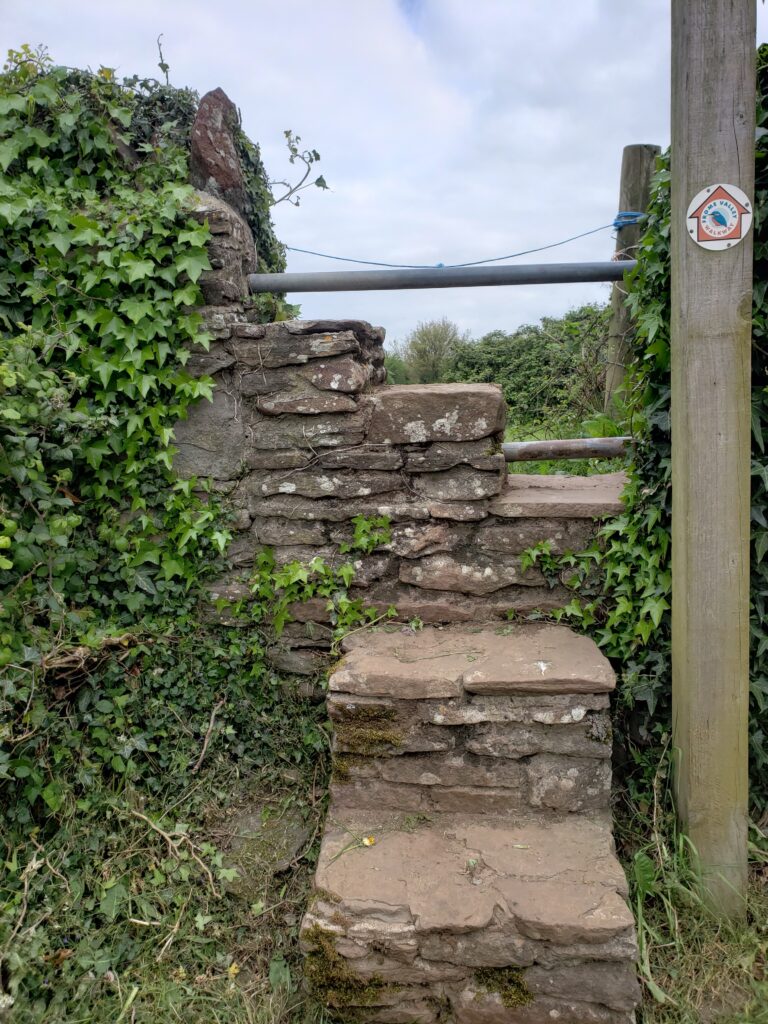
Historic features such as stiles (to manage movement of people and livestock) are an important part of our heritage, with some being “listed”, valued among other reasons for their use of local materials or craft. But they are at odds with contemporary expectations regarding access and inclusion.
Thanks to our panellists, we heard about positive experiences of addressing these challenges, including the processes followed to implement new approaches. For example:
Sally Oldfield, Parks Partnership Manager, London Borough of Islington, shared how a cross-departmental working group collaborated on multi-lingual “Welcome” signs which include images of diverse people engaging in a range of activities. This arose from work with Camden to deliver their joint Parks for Health Strategy.
Jonah Morris, Growth and Partnerships Manager North East, Walk Wheel Cycle Trust, reflected on lessons from their programme of barrier removal on the National Cycle Network.
Andrew Smith, Professor of Urban Experiences, University of Westminster, talked about an approach to staging festivals in parks which can lead to diversification rather than exclusion of user groups.
Abbi Flint, Postdoctoral Researcher in Poetry, Heritage and Community, University of Oxford and previously Researcher on the In All Our Footsteps Project, pointed to examples of heritage preservation and good practice in accessibility situated side by side in the landscape.
Signs, benches, barriers, fences, gates and stiles. These aren’t just objects; they are highly symbolic and value-laden ones as well.
You can read the Dezeen article here.
I have previously blogged about permission versus prohibition in parks here
Clare, Abbi and colleagues’ AHRC-funded research “In all Our Footsteps” is here.
“Just Objects?” Was funded by a Newcastle University’s School of History, Classics and Archaeology impact grant and kindly hosted by the Farrell Centre.
Thanks to the Built Environment Trust, my collaborators on the original exhibition at the Building Centre which you can read about here.
Photograph of stile and steps courtesy of Abbi Flint.
